Night of the Forgotten This man with the hard words in the night without his voice comes and calls you you severed one of your arms you, forgotten one you cut off one of your breasts you, forgotten one he comes and calls you you don’t have eyes anymore you, forgotten one he comes and calls you you go, forgotten one, groping into the black water wells you don’t burn your kiss you don’t fall in the well you don’t control your blood when he leans heavy over you to take one of his fingers to make the nights yours to turn into dawn whole again beautiful again the dawn https://www.amazon.com/dp/1926763904
Change of Times Now that time has come, you have to be able not only to fight for victory up to the end but to endure it without conceit and wild joy and more so to accept the timely defeat, to admit it without humiliation and fake composure. The others’ compassion and envy, the secret joy, whatever form they might take, they enrich you yet you never place responsibility on others nor assume the whole responsibility yourself; don’t look for good luck or postponements, for unforeseen events which will always appear, be careful especially for the hedonistic palindrome between self-justification and self-condemnation. You’ll come out of this a little wiser, if you only learn to face all human things a bit more serenely.
Nostalgia The melodic lines of the statue of Nike standing in the middle of the square still sing in my ears as a blonde woman with straw hair talks in a tone I cannot follow yet I listen attentively for reasons of civility as dusk embraces my thoughts about success and lots of money, time to have some, and when she will try to touch me, I’ll be re waiting for my chance, yearning for my new day to start in the peaceful serenity of old age and promise that next time I shall aim in the same direction before dusk comes with its purple colours
“Thank God she didn’t break her back. Or her neck,” said Mother Ross. “Uncle Finnegan is very good with young Dermot apparently and takes him to the strand every day. But it seems the troubles are bothering everybody down there.” Caitlin opened up the letter. “Let me see now. ‘Flynn’s gained three pounds in less than a month,’ Nora writes, ‘ most of it in this past week in Dublin. He has bought a new jumper.’” “That sounds like Nora,” said Mother Ross. “Here we are,” Caitlin said, reading the letter aloud. “‘It would be perfect here, Caitlin, if it wasn’t for all the trouble in the country, and people going about their business as if living in a bad dream and not knowing if it’s going to get worse or better before they wake up. All they seem to be able to talk about is Sinn Fein, Eamon de Valera and the possibility of civil war, together with the latest outrage. Altogether a hundred incidents were reported yesterday from all over the country, mostly the burning of vacated police barracks and income tax offices. There was one murder, three mail-van robberies, a bomb explosion, the burning of a courthouse and I can’t remember what else. During the past couple of days no less than six police officers have been murdered in circumstances of revolting cruelty. I won’t go into details.’” Caitlin turned to another page with a quick glance at the serious face of Mother Ross. “‘Last night we were visiting some friends of Uncle Finnegan’s—Flynn has never called him by his Christian name, which is Aloysius, because he could never say it properly when he was a little boy. Anyway it was a good night in this friend’s house, but a bad night around the city. Five unoccupied police barracks were set on fire. One was Bessborough Barracks near Phoenix Park, close to where the attempt was made to murder Lord French last December. Another was the old RIC barrack at Ballybrack, less than a mile from where we are staying. At the party last night there was a very nice man called O’Rourke, Eugene O’Rourke, I think, a head gardener for a man called Muldoon. Just after he left for home we heard shots. Poor Mr O’Rourke’s body was found lying on the Strathmore road at the foot of Dalkey Hill. I just couldn’t get over it today. No one knows how he came to be killed. The speculation is that he failed to answer the challenge of one of the sentries posted by the Republican terrorists who were lighting the fires and so got shot. Flynn tries to argue that all these things are bound to happen in a war situation but even he, I could see, was upset by Mr O’Rourke’s death.’” Caitlin lowered the letter. “Isn’t it just awful? What’s happening down there.”
Colt – Dolphin Ravouni rode the colt and preached the law of the tree society and the sea, opposite him on the back of a dolphin parades in the field of blue flags with sounds of princes
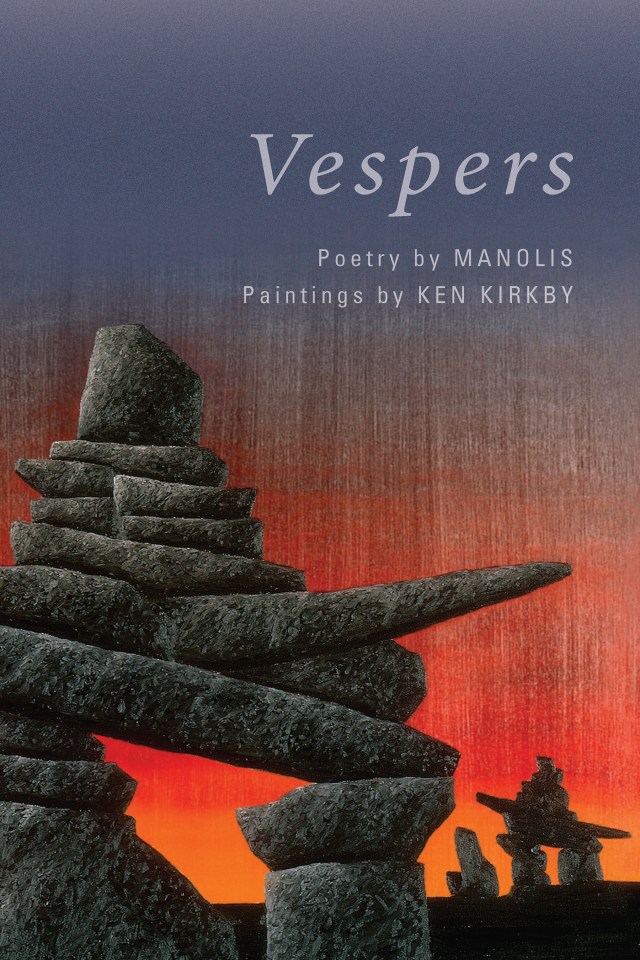
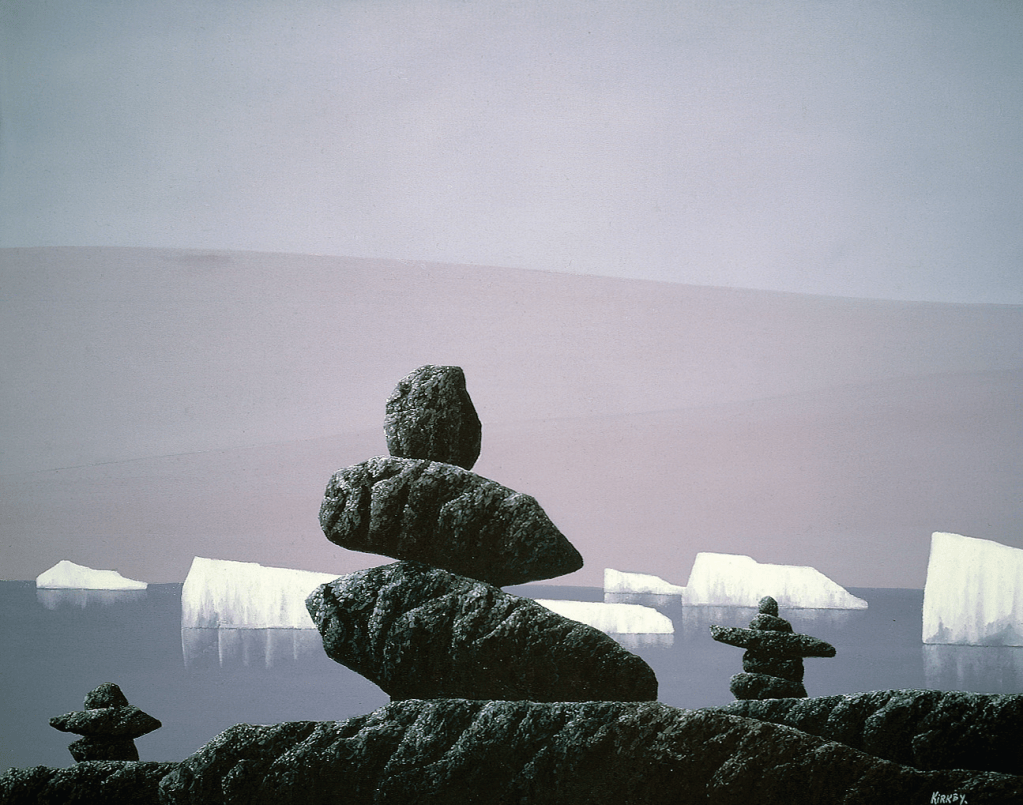
An arm points to the right under eastern sky-lobe wish murmured by thoughtful silence balancing two stone goddesses who talk of love passion on bear pelts inside the frosty igloo heated by two hearts warmth and lichen spreading tentacles by the Inukshuk’s base, lone iceberg keeping watch over lost seal, puffin, soul
Pip: Manolis Aligizakis has built a catalog that stretches from Nobel laureates to Soviet jazz clubs to a monk worrying about a vow of celibacy in the Canadian wilderness — so, a fairly focused literary project.
Mara: vequinox covers all of that here: modern Greek poetry collections, critical reviews of those collections, and a wide range of memoir, fiction, and travel writing. Let's start with the poetry itself.
Modern Greek Poetry Collections
Pip: The collections gathered here share a preoccupation with grief that refuses to stay still — it moves, it waits, it names itself after mythological figures. The question running through all of them is what form feeling takes when language is the only container left.
Mara: The anthology Neo-Hellene Poets opens that question directly. One poem sets the tone: "I shall wait for the star again to tell it, holding back a tear that has appeared in my eyes, that like a joy I held you in my embrace warm and gleaming, my complete grief."
Pip: Complete grief — not partial, not fading. The poem doesn't resolve the loss; it holds it like something precious. That's the emotional logic the whole anthology operates on.
Mara: The Seferis and Ritsos volumes push into stranger territory. The George Seferis Collected Poems moves through ritual and silence — oil on limbs, a crippled man in a courtyard, coins falling. The two Yannis Ritsos volumes, Volume VI and Volume VII, work in long associative sequences: eggshells creaking under a blind man's feet, a statue making peace with rain, a bus nearly empty by the seashore.
Pip: Ritsos in particular seems constitutionally opposed to the tidy image.
Mara: Katerina Anghelaki Rooke's Selected Poems names a stone Oedipus — irregular, gouged, tumbling — and licks it "to the end of my story until I understand what choice means." And Marginal closes the group with a more direct lyric longing, asking simply to sit close during cold winter nights and erase tears from eyelids.
Pip: From Nobel Prize territory to that — the range is the point. Which raises the question of how critics are actually reading this work.
Poetry Reviews And Anthologies
Mara: The reviews here do something useful: they slow down and describe what the poems are actually doing. The AI review of Yannis Ritsos Poems Volume VI focuses on how the collection handles moral witness. Here is the passage on one poem: "Whether we read them as payment, recognition, mockery, or some mixture of these, his earlier silence has acquired a social form. Ritsos needs little explanation to show how wrongdoing can make a place for itself within ordinary manners and a person's wish to avoid trouble."
Pip: So the political and the domestic are the same room. A glove on a kitchen table becomes a form of defiance; a neighbor's silence becomes complicity wearing a bouquet.
Mara: The review of Rendition takes a similar approach to Aligizakis's own poetry collection, tracing how war's damage continues long after impact — in the psyche, in intimacy, in the daily labor of staying alive. And the review of Tasos Livaditis Poems Volume II, which was long-listed for the 2023 Griffin Poetry Prize, emphasizes how Livaditis uses humor and religious imagery to keep sorrow from settling into a single solemn tone.
Pip: Grief seasoned with comedy, transcendence explained by having lost the way. That's a more interesting theology than most.
Mara: All three reviews share a method: they trust the poems to carry political and emotional weight simultaneously, without separating the two. That same refusal to separate things out runs through the fiction and memoir too.
Memoir Fiction And Travel
Pip: The prose writing spans Soviet Leningrad, the Canadian frontier, a Vancouver taxi at ten in the morning, and a Greek immigrant sitting exams — which is either a very broad canvas or proof that displacement is the one subject.
Mara: Jazz with Ella sets the tone early. A character named Volodya understands that his entire strategy for keeping his job is a stopgap: "Truly, he would never be free to play his music until he left the Soviet Union. Forever." Meanwhile, Jennifer arrives in Leningrad and sees sunshine yellow buildings and lacy ironwork on bridges — the city beautiful and crumbling at once.
Pip: The outside dazzles; the inside knows the score. That tension carries through most of these books.
Mara: Blood, Feathers and Holy Men moves it to the North American wilderness — Rordan and Yamka lost in a darkening forest, a priest awake all night praying not for their survival but for the Brother's vow of celibacy. Redemption follows Hermes through Vancouver, studying, dreaming of home, watching a supervisor's faint smile as he hands in his exam paper.
Pip: A faint smile of satisfaction — that's the whole immigrant experience compressed into one supervisor's face.
Mara: Straits and Turns takes a taxi driver's-eye view: customers sleeping off a drunk in the back seat while he calculates the fare and thinks about what his parents might be eating for supper back home. He Rode Tall works in a different register entirely — a Western, Joel grooming a sorrel gelding in a barn, the smell of sweaty horses and leather as a kind of homecoming.
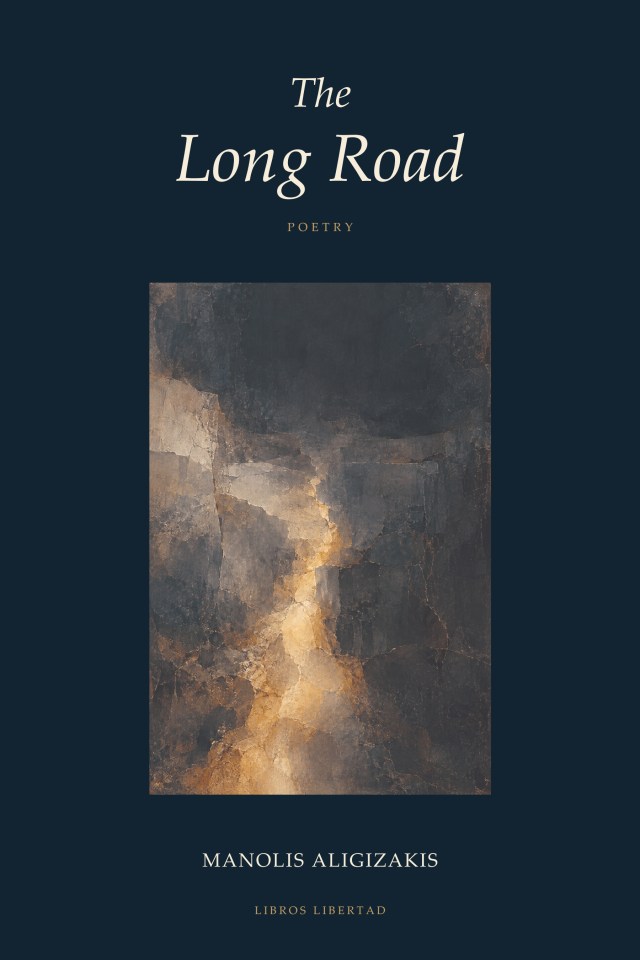
Mara: The lyric writing collected in Vernal Equinox, The Long Road, Hear Me Out, Marginal, and Kariotakis-Polydouri: The Tragic Love Story runs alongside the prose — poems about a new moon at zero percent, a mirror ruminating on two diverging paths, Athens giving itself to April like a lover.
Pip: And then there is Mythography, which steps back entirely — a painter's brush stopping before it completes the body, visitors seeing peels of skin, strips of cinnamon bark. An Essay on the Structure of the Human Imaginative goes further still, tracing how the absence of sacred books and rigid dogma in ancient Greece gave rise to what it calls a distinctive and unique Imaginative — the birthplace, it argues, of the free spirit and critical thought.
Mara: Which is not a side note. It is the philosophical ground under everything else in the catalog — the reason a stone gets named Oedipus, the reason grief can be called complete.
Pip: So the throughline is attention — to a glove, a faint smile, a zero-percent moon, an eggshell underfoot.
Mara: And the argument that paying attention is never neutral. More of that next time.
…The landscape inverted itself, each jutting item turned into an indentation, internal trees, internal houses, faces, statues, all internal like the forms you pour gypsum to create trees, houses, faces, statues from the start, in multiples, exact replications, always made of gypsum, of course, or metal. However, they retained all their colours, perhaps a little more moist, deep, a bit grayish, purple, olive oil green, brown; and the mountains with a minimal green hue of the expected spring. This faceless diaphaneity spread out to the outside levels too. The bus, almost empty, passed by the seashore; only the ticket collector was visible behind the windows like an ark made of glass. He always kept the tickets in his bag, wilted tickets, with a code number at their edges, that 2 and a half. And the display windows of the upper neighbourhoods resembled glass boxes of winter, diaphanous, diaphanous and Santa Claus with his cottony beard stood on the ladder and changed the sign and year.
I Have a Stone I lick a stone. The pores of my tongue match the pores of the stone. my tongue dries up and travels to the other side of the stone that touches the soil and has some mold glued on it like blood. suddenly my tongue becomes moist again; it moistens the stone which slides in my mouth. I call this stone Oedipus, because like Oedipus the stone is irregular with deep gouges in the eyes. It too tumbles with swollen ankles. When it stays still, it hides under it a fate, a serpent, my forgotten self. I call this stone Oedipus because it has no meaning on its own it has the shape and weight of the choice. so I name it, and I lick it to the end of my story until I understand what choice means until I understand what end means
I Come, sit next to me during the cold winter nights let me discover the pain of denial on your whitish fingertips let me meet that calling tender welcomed caress you received and felt before you ever touched me come, let me erase tears and sighs off your eyelids with you and with the stars we shall define the length of evening along with the end of the holy light